

The United Nations Office at Nairobi (UNON) continues to play an increasingly important role in supporting the work of the United Nations globally. As the only UN headquarters duty station in Africa and the Global South, Nairobi has evolved into a strategic hub for multilateral cooperation, bringing together UN entities working across the Organisation's three pillars: peace and security, sustainable development, and human rights.
Today, the Nairobi duty station hosts the largest UN compound in the world, at 140 acres, and supports operations reaching 166 countries. Its continued growth reflects the increasing importance of locating global operations closer to the regions and communities they serve.
Nairobi's Unique Role in the United Nations System

During a recent interview with NTV Kenya, United Nations Under-Secretary-General and Director-General of UNON, Mrs Zainab Hawa Bangura, highlighted Nairobi's unique role as home to the headquarters of the United Nations Environment Programme (UNEP) and the United Nations Human Settlements Programme (UN-Habitat). She also highlighted the value of bringing UN entities together on a common campus to enhance collaboration and operational efficiency.
"Today, we have the biggest UN compound in the world that brings everybody together under one umbrella and common premises, which is the vision of the Secretary-General," said Mrs Bangura.
Why the United Nations Is Growing in Nairobi
The Director-General noted that Nairobi’s growing importance is rooted in a combination of practical and strategic considerations.
She described Nairobi’s strategic location as one of the key factors behind the growing footprint of the UN operations. Positioned near the equator and within a time zone that overlaps with Asia, Europe and parts of the Americas, Nairobi allows UN teams to support operations around the world within the same working day. From Pacific Island States such as Fiji to countries in Latin America, Africa and Europe, services managed from Nairobi can reach UN personnel and offices across multiple regions more efficiently. UNON already provides administrative and operational support to UN offices in 166 countries.
Through shared services including finance, procurement, human resources, information technology, logistics and conference support, the Nairobi duty station helps enable UN operations worldwide. The Nairobi duty station is also home to critical shared services that enable the Organisation's global work, including medical support functions and the Medical Evacuation Centre, which provides a strategic capability for supporting UN personnel operating in complex and emergency environments.
The expansion is already visible on the Gigiri campus, where approximately 900 staff have either relocated or are expected to relocate by 2027, resulting in a net increase of more than 600 positions despite reductions affecting some parts of the UN system.
Benefits to the Kenyan Economy
The expansion of the UN presence is already generating opportunities for Kenyans through employment, procurement, conference services and demand for local goods and services. Approximately 250 Kenyans are currently employed on ongoing construction works, with additional opportunities expected as future phases of the ongoing Conference Facilities Project are tendered. The completed office expansion and the wider development programme have also created opportunities for Kenyan engineers, architects, contractors, suppliers, and professional service providers, while strengthening local expertise in delivering complex international infrastructure projects.
Mrs Bangura pointed to Kenya's strong infrastructure and skilled workforce as key factors supporting the expansion of the UN presence in Nairobi. More broadly, Nairobi's growing role as a global conference destination is expected to support hotels, transport providers, restaurants, aviation services, tourism operators and other sectors that benefit from international visitors and events.
Beyond direct employment and procurement, UNON estimates its economic footprint is already in the region of US$2 billion annually. That contribution is expected to grow further as the UN and broader diplomatic footprint increases. The benefits extend well beyond the Gigiri campus, supporting businesses, jobs and investment across Nairobi and the wider Kenyan economy.
UNON Conference Facilities Project
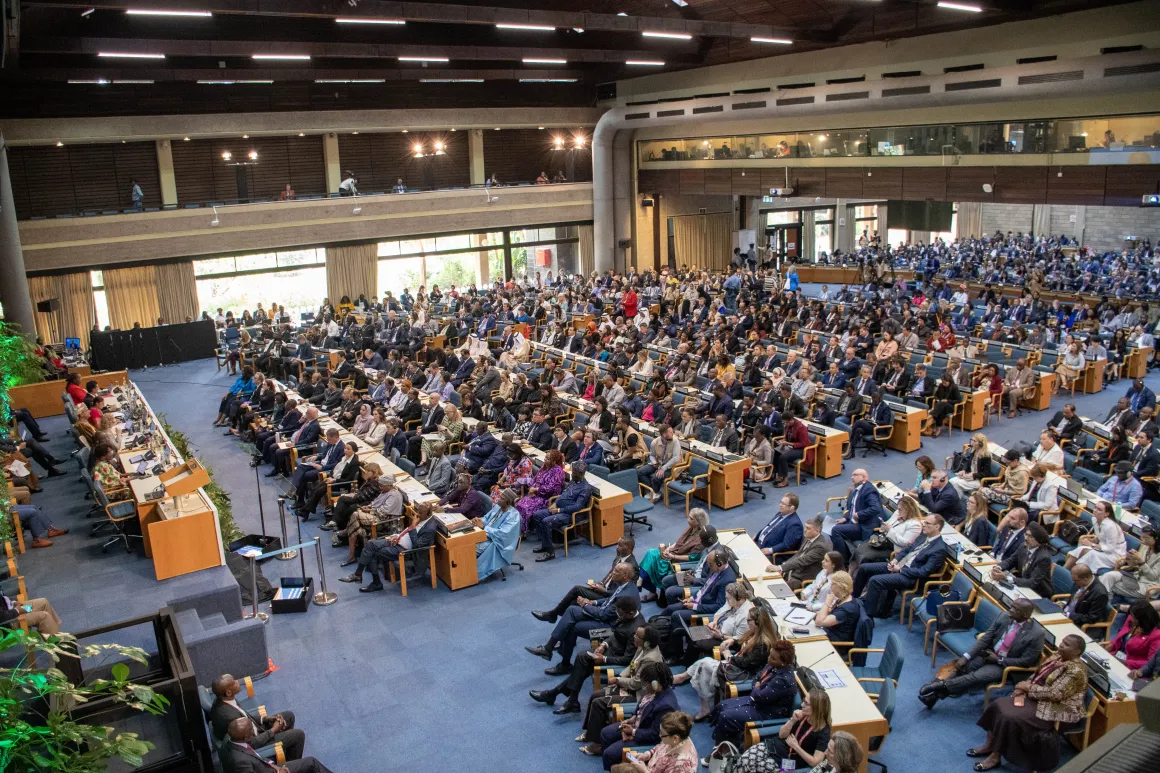
The Conference Facilities Project, valued at $265.7 million, reflects the increasing demand for Nairobi as a venue for international diplomacy and multilateral engagement. Current conference facilities, completed in 1985, were designed to host roughly 2,200 participants. However, attendance at recent global meetings has significantly exceeded that capacity. More than 6,000 participants attended the seventh session of the United Nations Environment Assembly (UNEA-7) in 2025.
Once completed in 2030, the project will increase conference capacity to approximately 9,000 delegates, expand meeting rooms from 14 to 30 and create a new 1,600-seat Assembly Hall. The new facilities will strengthen Nairobi's role as a convening centre where governments, civil society, academia, the private sector and development partners can come together to address pressing global challenges.

Nairobi: The UN's "Golden Gem"
The growth of the Nairobi duty station has been shaped by Kenya’s support for multilateralism and the United Nations. President Jomo Kenyatta laid the foundation by allocating the initial 100 acres of land for the establishment of UNEP, while President Daniel Arap Moi gave an additional 40 acres for the establishment of UN-HABITAT. President Mwai Kibaki championed the establishment of UNON, while President Uhuru Kenyatta supported the development of major road infrastructure around the Gigiri complex.
More recently, President William Ruto reaffirmed Kenya's commitment by joining the UN Secretary-General in May 2026 to inaugurate the newly completed office expansion and upgrade project, and to break ground for the Conference Facilities Project. Together, these initiatives represent a combined investment of approximately US$340 million, making it one of the largest United Nations infrastructure investments in Africa outside of peacekeeping operations. This investment reflects confidence in Africa’s role in shaping global solutions and strengthening international cooperation.
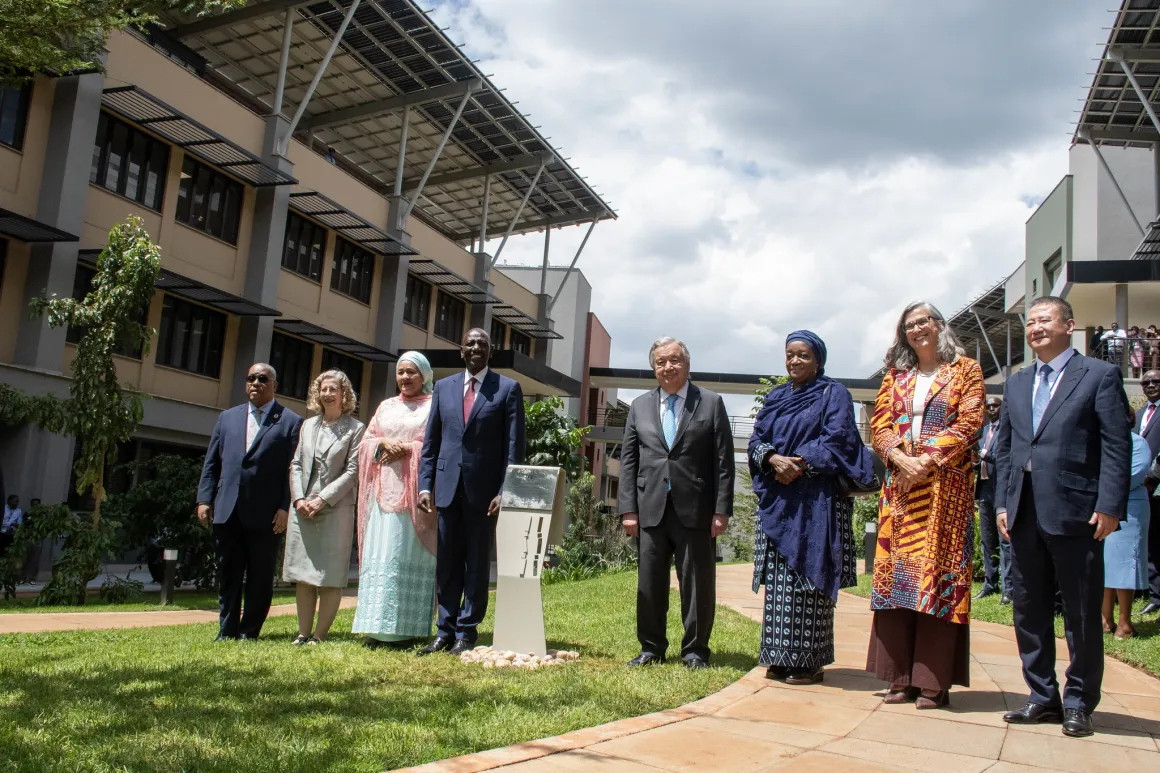
Looking ahead, Mrs Bangura said the continued growth of UNON also reflects confidence in Africa's role in shaping global solutions. She recalled that, upon her appointment as Director-General, the Nairobi duty station was described to her as the "golden gem" of the United Nations, because of its unique position within the Organization and its growing strategic importance.
Mrs Bangura also reflected on former UN Secretary-General Dag Hammarskjöld’s observation that the United Nations was created not to take humanity to heaven, but to save it from hell. Strengthening Nairobi is therefore not simply about new buildings or larger conference halls. It is about strengthening one of the world's essential platforms for international cooperation.
Video Credit: NTV Kenya.
